

Pets Dress Up and Perform Tricks to Bring Festive Cheer to Hospice Patients
published by Lianhe Zaobao on February 21, 2026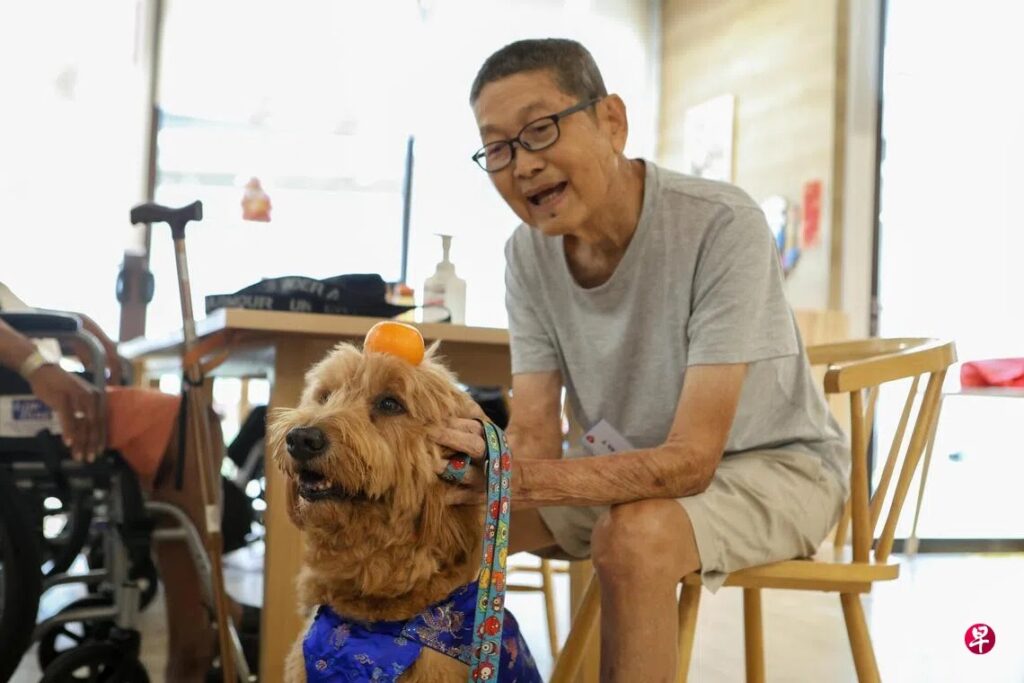
Translated from Lianhe Zaobao:
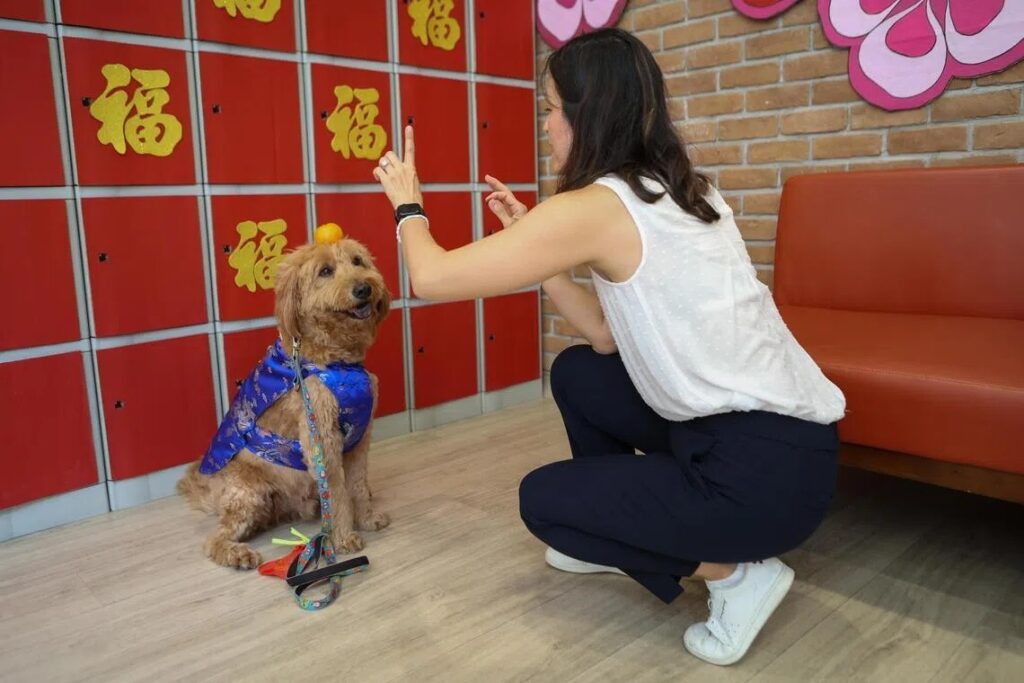
“Shake hands”, “sit”, “sleep”, “look” — eight-year-old Bailey understands Cantonese commands given by his owner. Not only can he shake hands, sit and lie down, he recently learned a new trick: balancing a mandarin orange on her head while looking forward, creating an adorable pose as if offering Lunar New Year greetings.
Bailey is a Golden Poodle and one of the pets participating in Assisi Hospice’s animal-assisted therapy programme.
During this year’s Lunar New Year period, Bailey put on a bright blue vest and was led by his owner, Wendy, to the Assisi Hospice Day Care Centre. There, he demonstrated his festive trick, bringing laughter and a sense of celebration to the centre’s palliative care patients.
Assisi Hospice launched its animal-assisted therapy programme about eight years ago, after observing that patients naturally feel warmth and emotional comfort when interacting with pet cats and dogs.
A spokesperson from Assisi Hospice said that for patients receiving palliative care, emotional comfort is just as important as physical comfort. Animal-assisted therapy can help reduce anxiety, lift spirits, and bring moments of joy and calm to patients facing difficult circumstances.
“Interacting with animals can remind some patients of past experiences with their own pets and other life memories. It also opens up conversations and helps patients build meaningful connections with family members or volunteers. These precious moments of companionship help patients feel understood, emotionally comforted and less alone — which lies at the heart of palliative care.”
The animal-assisted therapy programme was paused during the COVID-19 pandemic to safeguard the health of patients and volunteers, and gradually resumed from 2022. Currently, the programme has 11 therapy dogs and two therapy cats. The hospice arranged 843 pet therapy sessions in 2023, which increased to 1,211 sessions last year.
The programme mainly serves day care and inpatient patients, though volunteers occasionally bring their pets to visit patients receiving home hospice care upon request.
Volunteers Are Trained and Pets Must Pass Temperament Assessments
In addition to volunteers undergoing training to learn interaction skills with patients and basic clinical knowledge, the pets must also pass temperament assessments before they are allowed to visit patients. These assessments are conducted by trainers approved by the hospice.
The spokesperson explained that patients and caregivers may not always have experience interacting with animals. Therefore, therapy pets must not only be obedient and gentle, but also have a calm temperament so they can remain composed in busy healthcare environments without being startled by noises, wheelchairs or moving medical equipment.
Volunteers are also required to present veterinary certificates confirming that their pets are healthy, free from parasites and have received regular vaccinations.
Bailey’s owner, 46-year-old university admissions consultant Wendy, traces her family roots to Taishan, Guangdong. She speaks Cantonese with her three daughters at home, and trained Bailey to understand Cantonese commands so that her children would have opportunities to practise the language while playing with the family dog.
Many patients smile brightly when they see Bailey wave his paw. Wendy shared that animals often help people open up, and patients frequently reminisce about their own pets and chat warmly with her. One patient, who had previously been bitten by a dog and was fearful of them, gradually felt comfortable enough to stroke Bailey’s head and even feed her treats. This moment brought Wendy great joy.
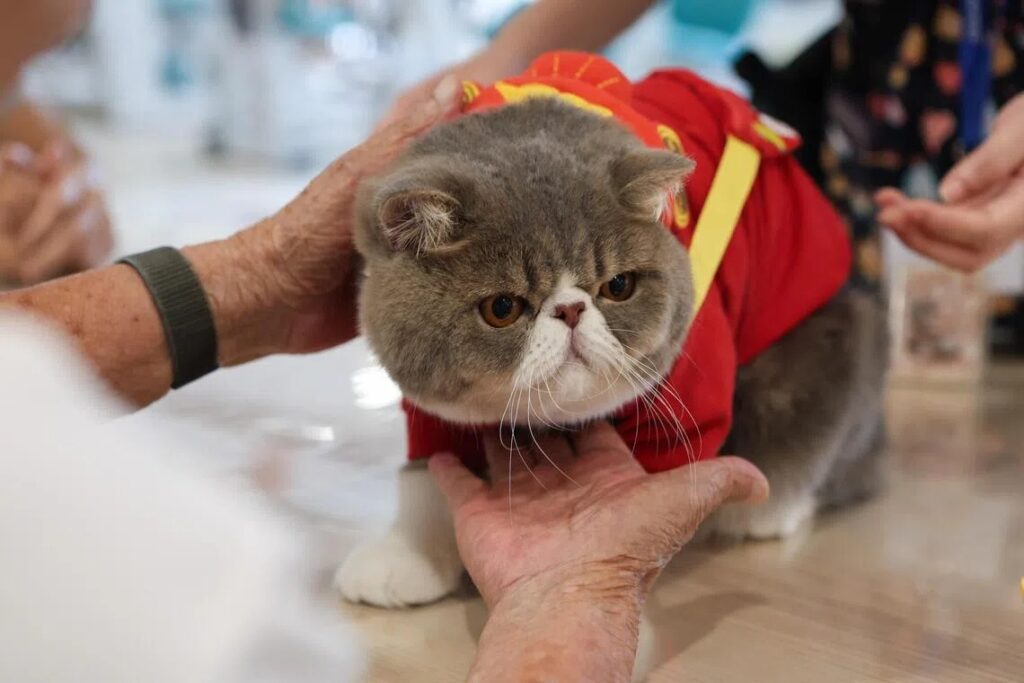
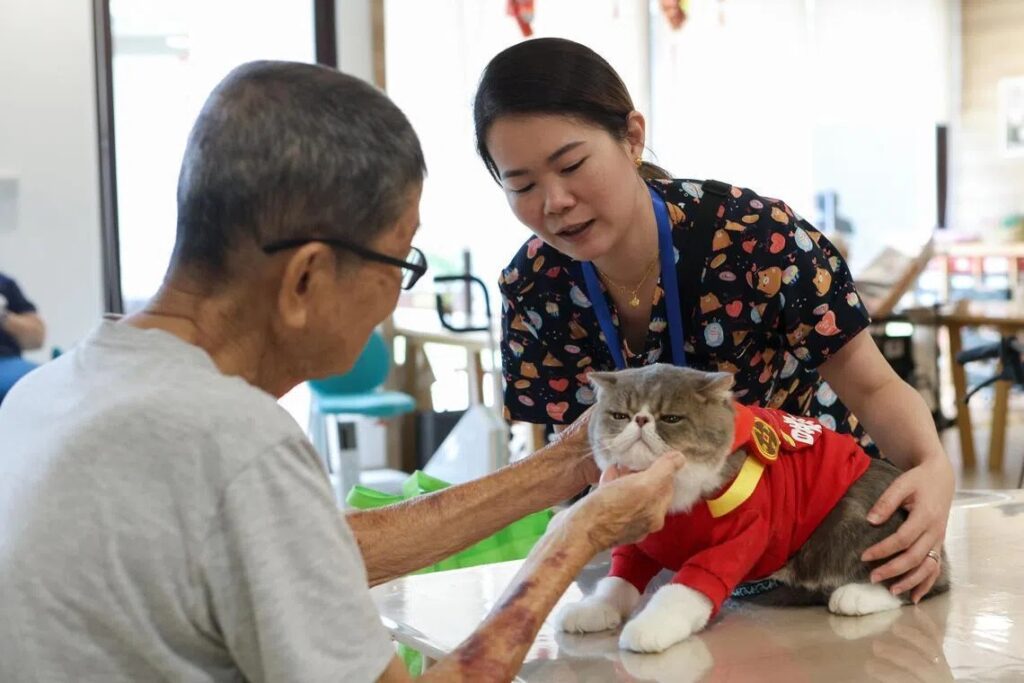
Another animal volunteer at the hospice is Bak Nyi Zai, a two year-old cat. Recently, the cat also joined in the festive spirit by wearing a red vest for Lunar New Year. Patients who love cats often enjoy holding it in their arms.
The cat’s owner, nurse Rybina, noticed that Bak Nyi Zai is gentle and tolerant of being stroked by anyone, which inspired her to bring the cat into the animal-assisted therapy programme.
For palliative care patients, Rybina believes her main role is to listen, while Bak Nyi Zai provides comfort.
“Simply touching the cat can make a patient who had no expression on his or her face begin to smile.”
Patients often stroke Bak Nyi Zai while holding it, gradually drifting off to sleep. Some patients even ask nurses to wake them up when the cat arrives, so they will not miss its visit.
Rybina does not mind acting as the “driver” who brings Bak Nyi Zai to and from volunteer sessions.
“Being able to help patients in their final stages of life and bringing them some comfort gives me great satisfaction.”
Click here to view the article.